


What is the best wood for a timber frame pergola or pavilion?
Choosing the right wood species for a timber frame structure is one of the most consequential decisions in the project. Here’s how the major options compare for outdoor pavilion and pergola applications:
Douglas Fir (NORWEH’s material):
- The strongest softwood species commonly available in North America for its size
- Tight, straight grain — ideal for exposed structural applications where appearance matters
- Dense enough to hold mortise and tenon joinery securely without splitting
- Good natural durability above grade with proper sealing
- The same species used in structural building framing — built to perform under load
Western Red Cedar:
- Excellent natural rot resistance — best for ground-contact applications
- Lighter and softer than Douglas Fir — less suited for heavy structural spanning
- Tends to develop more surface checking and movement in thick timber sections
- Beautiful grain and reddish tone; naturally aromatic
White Oak:
- Extremely hard and durable; naturally rot-resistant
- Significantly more expensive than Douglas Fir or Cedar
- Heavier and harder to work with — less common in kit form
Pressure-Treated Lumber:
- Excellent rot resistance; economical
- Not appropriate for exposed finish timber work — green color, rough surface, and chemical treatment make it unsuitable aesthetically
- Best reserved for in-ground post bases, not visible structural members
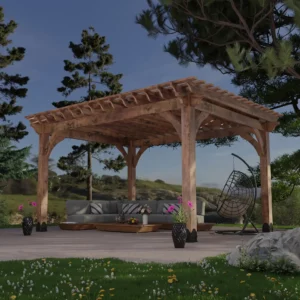
NORWEH uses Grade No. 1 Structural Douglas Fir from Pacific Northwest forests — the highest quality and tightest-grained Douglas Fir available. This is the correct choice for exposed timber frame outdoor structures.