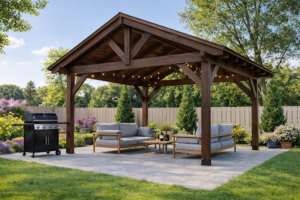
Do You Need a Permit for a Pavilion? What US Homeowners Should Know
Planning a backyard pavilion is an exciting step, but somewhere between choosing a size and picturing the finished space, most homeowners run into the same



Purchasing a new home with a generous backyard presents an immediate and exciting opportunity: creating a covered outdoor living space that extends the home’s functionality through every season. Most homeowners arrive quickly at two options, a gazebo or a backyard pavilion, and find the gazebo vs pavilion decision more consequential than it first appears. Both structures offer real appeal, but they serve fundamentally different purposes, and selecting the wrong one is a mistake that tends to reveal itself slowly over several seasons.
This guide provides a clear, evidence-based comparison across cost, permitting, sizing, and resale value so homeowners can make a confident, well-informed decision before the spring building season closes.
A gazebo is a freestanding, typically octagonal structure with a decorative peaked roof and open or latticed sides, designed primarily as a landscape focal point. A backyard pavilion is a rectangular structure with a solid permanent roof and fully open sides, engineered for year-round functional use rather than visual accent. The distinction goes beyond shape, it reflects a difference in structural intent, construction standards, and long-term performance.
A gazebo is built around aesthetics whereas a backyard pavilion is built around use, accommodating outdoor dining sets, kitchen appliances, ceiling fans, and a full gathering of people through wind, rain, and temperature extremes. The engineering behind each structure reflects that contrast directly.
For homeowners who want a space they inhabit rather than admire, the gazebo vs pavilion decision has a clear direction. A well-built pavilion becomes the functional center of outdoor living for decades. A gazebo, however charming, often becomes a structure that is appreciated from a distance rather than actively used.
The initial gazebo cost can appear attractive. Prefab models range from $800 to $2,000, while a permanent wood-frame gazebo with a shingled roof typically runs $5,000 to $15,000 installed. However, the upfront figure represents only a portion of the true cost of ownership.
The ongoing gazebo cost accumulates through annual refinishing, lattice panel replacement, roof valley repairs, and post re-anchoring as foundations shift through seasonal freeze-thaw cycles. A $6,000 gazebo can realistically exceed $12,000 in total expenditure over a decade when maintenance costs are properly accounted for.
NORWEH Timber Frame’s pavilion kits are priced from $11,235 for the Heavy Timber model and $8,007 for the Light Timber, constructed from premium Douglas Fir with a 10-year structural warranty and complimentary freight shipping across the contiguous United States. When evaluated over a 10-year horizon, the backyard pavilion frequently represents the more cost-effective investment.
Permit requirements for outdoor structures vary considerably by state and municipality, so it is always advisable to check with your local authority before beginning any build. For gazebos, many jurisdictions offer accessory structure exemptions, particularly for smaller prefab models without permanent footings, though this should never be assumed without verification.
For pavilion kits, the picture is more straightforward than most homeowners expect. All NORWEH Timber Frame backyard pavilion structures are engineer-approved, and the majority of NORWEH Timber Frame customers do not require a permit to complete their installation. The structural documentation is already in place should a local authority request it.
For those in jurisdictions that do require a permit, NORWEH Timber Frame can connect homeowners directly with the engineer behind the approved designs to provide the necessary paperwork. A properly permitted pavilion kit on the property record is recognised by appraisers and buyers as substantive added value, making it a sound long-term decision regardless of local requirements.
One of the principal advantages of a direct-to-consumer pavilion kit is accessibility of installation. Modern timber frame kits are precision-engineered with mortise and tenon joinery, designed for assembly by homeowners with standard tools and no prior construction experience. The majority of installations are completed within a weekend with minimal additional labour.
NORWEH Timber Frame delivers every pavilion kit component via flatbed freight directly to the customer’s address. All timbers arrive pre-cut, pre-drilled, and pre-treated at the production facility, eliminating on-site fabrication decisions and reducing the risk of costly errors. Comprehensive installation instructions guide the builder through each stage from foundation to ridgeline.
For those who prefer professional installation, local contractors routinely complete backyard pavilion kit builds in a single working day. Either pathway provides access to a permanent, high-quality outdoor structure at a fraction of the cost of a fully custom build, a meaningful advantage for new homeowners managing competing renovation priorities.
In Sun Belt markets across Texas, Florida, and Arizona, covered outdoor living space is a well-established purchase driver. Buyers in these markets actively factor permanent outdoor structures into their offers, and a solid-roof backyard pavilion is frequently perceived as a functional living area rather than a supplementary feature.
In northern and Mountain West markets, buyers and appraisers apply greater scrutiny to outdoor structures, evaluating build quality and weather resistance before attributing value. A timber frame backyard pavilion constructed on permitted concrete footings meets that standard with authority, whereas a visibly weathered or structurally lightweight gazebo often introduces buyer hesitation rather than confidence.
Across all major US real estate markets, the gazebo vs pavilion comparison at resale yields a consistent conclusion: permanent, permitted construction outperforms decorative additions. A well-built pavilion on the property record is the kind of improvement that distinguishes a listing rather than merely decorating it.
Also Read: How to Use Timber Frame Structures to Build Your Perfect Carport or RV Cover
Most gazebos are offered in 10×10 or 12×12 configurations with an octagonal footprint. While compact and visually appealing, the circular perimeter restricts furniture placement, generates inefficient corner space, and limits comfortable occupancy. These constraints become apparent quickly during practical use.
NORWEH Timber Frame’s pavilion kits are available from 10×10 through 24×26 in width, with length configurations extending to 36 feet on the Heavy Timber range. A rectangular backyard pavilion at 12×16 or larger accommodates a full dining arrangement, a dedicated cooking station, and lounge seating simultaneously, a layout that functions as a genuine outdoor room.
For properties with a minimum of 15 feet of clearance on any side, a pavilion of meaningful scale is well within reach. The gazebo vs pavilion sizing consideration ultimately reflects the homeowner’s intended use: a pavilion rewards those who want a space designed for regular, substantive outdoor living.
Also Read: Pergola in the City: Do Pergolas Add Value to Urban Homes?
For homeowners with the space and the intention to invest in genuine outdoor living, the gazebo vs pavilion decision has a clear and defensible answer. A timber frame backyard pavilion delivers structural durability, functional versatility, and documented property value in a way that a gazebo, however attractive, is not designed to match.
NORWEH Timber Frame brings Scandinavian timber frame craftsmanship to American backyards, structures rooted in generations of woodworking tradition, designed to become a legacy feature of your property rather than a seasonal addition.
The main difference is their structure and enclosure. Gazebos typically have a more enclosed, often polygonal design with a defined roof and railing, while pavilions are generally more open-sided structures with a larger, simpler roof. Pavilions are often better suited to outdoor dining, entertaining, and larger gatherings.
It depends on how you plan to use the space. A pavilion can be a better choice for homeowners who want an open outdoor living area for dining, grilling, relaxing, or entertaining. A gazebo may be preferable if you want a smaller, more defined structure for seating or creating a private retreat.
Not necessarily. Permit requirements vary by state, county, and municipality, and some smaller gazebos or pavilions may not require a permit. Requirements can depend on factors such as the structure’s size, height, location, foundation, and distance from property lines. Before building, check with your local building department to confirm whether a permit is required. For more details, read our guide: Do You Need a Permit for a Pavilion? What US Homeowners Should Know.
Yes. With the right design, a pavilion can be used throughout the year. Features such as lighting, fireplaces or fire features, outdoor heaters, screens, and weather-resistant furniture can make the space more comfortable across different seasons.
Planning a backyard pavilion is an exciting step, but somewhere between choosing a size and picturing the finished space, most homeowners run into the same
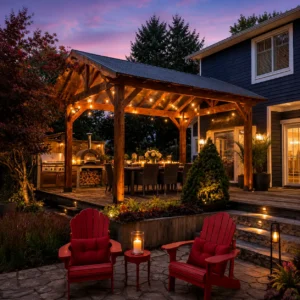
Outdoor living has become one of the most valued features of a modern American home, and a permanent pavilion sits at the center of that
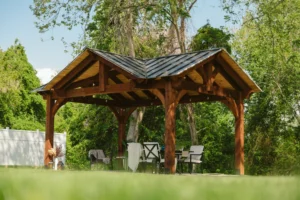
Some of the most memorable tasting experiences at wineries and breweries across the United States are not happening inside. They are happening under the open
It looks like you're visiting from Canada. We have a dedicated Canada site for you.
Take me to the Canada site