Do You Need a Permit for a Pavilion? What US Homeowners Should Know
Planning a backyard pavilion is an exciting step, but somewhere between choosing a size and picturing the finished space, most homeowners run into the same



Many homeowners invest in a gazebo expecting a long-term backyard feature, only to face fading finishes, loose joints, or costly repairs within a few years. This disappointment often comes from prioritizing decorative appeal over structural performance in the gazebo vs pavilion decision. What initially enhances the look of a yard can quickly become a recurring maintenance burden.
True backyard living requires structures designed for decades of use, not short-term enjoyment. Understanding why outdoor pavilions outlast gazebos allows homeowners to invest in solutions that support a functional, reliable outdoor lifestyle instead of constant upkeep and eventual replacement.
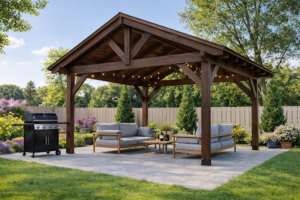
The primary difference is permanence and structural strength. An outdoor pavilion is a permanent structure built on concrete footings with heavy timber posts and a durable roof system. It is designed as a long-term extension of the home, offering usable shade, weather protection, and flexibility for entertaining and daily use.
A gazebo, by contrast, is typically a lighter, decorative structure with a circular or octagonal shape and surface-mounted anchoring. While gazebos enhance visual appeal, they are not engineered for the same level of durability or long-term backyard living performance.
Foundation strength determines how well a structure withstands time, weather, and load. Outdoor pavilions are anchored into concrete footings that resist settling, shifting, and freeze-thaw cycles, providing long-term stability. This solid foundation allows the structure to safely support heavy roof loads, including snow accumulation, and remain secure in high winds.
A permanent, professionally engineered foundation is what sets pavilions apart from lighter structures. At NORWEH Timber Frame, pavilion designs prioritize long-term performance from the ground up, ensuring each timber post and joint contributes to decades of durability. In contrast, gazebos often rely on surface-mounted or shallow footings that cannot provide the same stability or longevity.
Material quality plays a critical role in longevity. Outdoor pavilions are typically constructed from premium Douglas Fir, valued for its strength, dimensional stability, and resistance to environmental stress. When paired with penetrating finishes, the wood remains protected against moisture, UV exposure, and temperature changes.
Gazebos often rely on thinner, lower-grade lumber and decorative components to reduce cost and weight. These materials degrade faster outdoors, leading to warping, cracking, and frequent repairs that shorten the structure’s usable lifespan.
Pavilion roofing systems are more durable and weather-resistant. Outdoor pavilions support architectural shingles or metal roofing that can match the home, creating a cohesive and permanent appearance. Simple gable or hip roof designs promote proper drainage and ventilation.
Gazebo roofs feature complex, multi-faceted shapes with valleys and cupolas that trap water and debris. Over time, these areas become vulnerable to leaks, rot, and premature roof failure.
Yes, an outdoor pavilion is more cost-effective. Although the initial investment is higher, pavilions offer significantly longer lifespans and lower maintenance costs over 20–30 years. Many homeowners replace or heavily repair gazebos multiple times during that same period.
When total ownership costs are considered, including repairs, refinishing, and replacement, the pavilion consistently delivers better value. Durability and reduced upkeep make it a smarter financial decision.
A well-built outdoor pavilion can last 30 to 50 years or more. Permanent foundations, heavy timber framing, and durable roofing systems allow these structures to withstand decades of weather, including rain, snow, and sun, while maintaining their strength and appearance. This makes them a long-term investment in both function and value for backyard living.
This level of durability is a hallmark of professional timber frame construction. Structures designed by NORWEH Timber Frame are engineered specifically for long-term outdoor use, ensuring that each pavilion performs reliably over time. Unlike lighter, decorative gazebos, these pavilions are built to remain safe, functional, and visually appealing for generations.
Yes, outdoor pavilions add functional living space. They create defined areas for dining, entertaining, and relaxing, effectively extending the usable footprint of the home into the backyard.
Because they are permanent structures, pavilions are often perceived as property improvements rather than decorative additions. This makes them especially appealing to buyers seeking a strong outdoor lifestyle component.
Outdoor pavilions are designed to adapt over time. Their open layouts and strong framing allow for future upgrades such as lighting, ceiling fans, heaters, outdoor kitchens, fireplaces, and retractable screens.
Gazebos offer limited adaptability due to lighter construction and built-in elements that restrict modification. As families grow and needs evolve, pavilions better support changing backyard living requirements.
Maintenance requirements are minimal and predictable. Routine inspections, occasional power washing, and periodic finish maintenance are usually sufficient to preserve both appearance and structural performance. High-quality finishes and durable timbers help prevent common issues such as cracking, warping, or fading, ensuring the pavilion stays functional and attractive for decades.
Gazebos require more intensive upkeep. Decorative details trap moisture and demand frequent staining, repairs, and component replacement, increasing time and ownership costs. Over time, these recurring maintenance tasks can make a gazebo more expensive and time-consuming to care for than a well-built outdoor pavilion.
Also Read: Transform Your Outdoor Living Space
Gazebos typically cost more over time. Frequent refinishing, roof repairs, and structural fixes add up quickly and often exceed initial expectations. These ongoing expenses make it difficult for homeowners to predict long-term costs accurately.
Outdoor pavilions use durable materials and clean designs that reduce long-term maintenance expenses. Over time, the lower cost of ownership becomes a major advantage, allowing families to enjoy their backyard living space without constant repairs or unexpected bills.
Also Read: Custom Timber Frame Kits for Efficient Construction
Outdoor pavilions outperform gazebos in durability, adaptability, and total value. While gazebos may offer short-term visual charm, they are not designed for lasting backyard living or long-term performance.
For homeowners seeking a reliable outdoor lifestyle space that supports daily use and entertainment for decades, an outdoor pavilion is the clear and confident choice.
Planning a backyard pavilion is an exciting step, but somewhere between choosing a size and picturing the finished space, most homeowners run into the same
Outdoor living has become one of the most valued features of a modern American home, and a permanent pavilion sits at the center of that
Some of the most memorable tasting experiences at wineries and breweries across the United States are not happening inside. They are happening under the open
It looks like you're visiting from Canada. We have a dedicated Canada site for you.
Take me to the Canada site