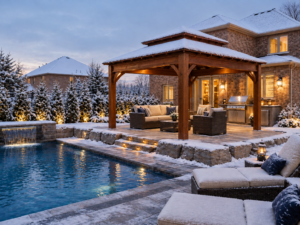
How to Extend Your Pavilion Season Into Fall and Winter
For most American households, the outdoor season has traditionally followed the calendar: the patio furniture comes out in May and goes back into storage by


For most American households, the outdoor season has traditionally followed the calendar: the patio furniture comes out in May and goes back into storage by October. That pattern is changing. Homeowners are increasingly treating the backyard as a year-round extension of the home, and the shift toward four-season outdoor living has turned fall and winter from an off-season into some of the most rewarding months to spend outside. Crisp evenings, early sunsets and the first cold snaps create a setting that summer simply cannot replicate.
The challenge is rarely the structure itself. A well-built pavilion already provides the most important ingredient, a solid roof overhead, yet a covered space still loses its appeal quickly when wind cuts across it and temperatures fall after dark. Comfort in the cooler months comes from what happens beneath the roof: how the space is heated, how it is sheltered from the wind, and how it is lit and furnished once the evenings draw in.
This guide covers the practical upgrades that turn a backyard pavilion into a fall and winter destination, from pavilion heaters and outdoor fireplace options to enclosure walls and the finishing details that make a cold-weather evening feel inviting.
Yes. A pavilion with a solid, permanent roof can be used comfortably through fall and winter once heat, wind protection and lighting are added beneath it. The roof keeps rain, sleet and snow off the seating area, which is the one form of protection an open patio or pergola cannot offer. What limits cold-weather use is not the structure but the microclimate underneath it: open sides allow wind to strip away warmth, and shorter days leave the space in darkness by early evening. Address those factors and a pavilion becomes a sheltered outdoor room that stays useful long after the summer furniture would traditionally be packed away. The structural side of cold-weather performance, such as snow load, wind and a frost-protected foundation, is a separate question from comfort, so this guide focuses on the lifestyle upgrades that make the space genuinely enjoyable.
Comfort in a cold-weather outdoor space depends on three things working together: a reliable heat source, shelter from the wind, and warm, layered lighting. It starts with wind, because moving air carries heat away from the body far faster than still air, which is why a 50-degree evening can feel pleasant in a sheltered corner and uncomfortable in an exposed one. Once the wind is managed, heat becomes far more effective, since warmth from a heater or fire stays in the seating area rather than drifting away. Lighting completes the picture, as warm-toned light makes a space feel welcoming and signals that the evening is meant to continue. The most successful fall outdoor living spaces plan these elements as a system rather than adding them one at a time, and the result is a pavilion that is comfortable rather than merely usable.
Radiant heaters are generally the most effective pavilion heaters, because they warm people and surfaces directly rather than trying to heat open air. Electric infrared heaters are a popular choice for covered spaces: they produce no combustion by-products, can be mounted overhead or on posts and beams, and deliver warmth almost instantly. Natural gas and propane heaters offer higher heat output and suit larger gatherings, while freestanding patio heaters provide flexibility for homeowners who prefer not to install anything permanent.
Whichever type you choose, the installation details matter more than the brand. Every heater carries manufacturer-specified clearances to ceilings, beams and other combustible materials, and those clearances must be respected under a timber roof. Choose units rated for outdoor and covered use, have hardwired electric or gas units installed by a licensed electrician or gas professional, and confirm local code requirements before work begins. If hardwired heaters are part of the plan, an optional electrical groove, a routed channel for running wiring through the posts, can be added when ordering a NORWEH Timber Frame Pavilion HT, keeping cables neatly within the timber. The solid roof and heavy timber beams then give homeowners a defined ceiling plane to plan heating around, and positioning heaters over the main seating and dining areas concentrates warmth exactly where people gather. The outcome is a space that stays comfortable on a cool October evening without anyone needing to retreat indoors.
Also Read: Pavilion Lighting Ideas to Set the Mood Year-Round
An outdoor fireplace pavilion is achievable, provided the fireplace is a properly engineered unit with a chimney or flue that carries smoke and heat safely away from the roof structure. A fireplace creates the strongest focal point any outdoor room can have: it anchors the seating, adds radiant warmth and gives the space the atmosphere of a cabin retreat. Because it involves an open flame beneath a timber roof, however, it requires careful planning, adherence to local fire codes and, in most areas, a permit, so it is worth reviewing what US homeowners should know about pavilion permits before settling on a design. Most homeowners work with a qualified fireplace installer and their local building department from the outset.
An open wood-burning fire pit placed directly under a roof is a different matter and is generally not recommended, since smoke, sparks and heat rise straight into the ceiling. A more practical approach is to position a fire pit just beyond the pavilion’s roofline, creating a covered seating zone and an open-air fire zone side by side. Alternatively, a gas fire table that its manufacturer specifically rates for covered installations, with stated overhead clearances, brings the glow of a fire under the roof itself. Either approach delivers the warmth and character of a fire while protecting the long-term integrity of the structure.
Adding one or more solid walls is the most effective way to block cold wind and hold warmth in a pavilion’s seating area. An open pavilion is ideal in July, but in November the same open sides allow every breeze to pass straight through. Enclosing the side that faces the prevailing wind changes the microclimate considerably, and it also makes heaters and fire features noticeably more effective.
The NORWEH Privacy Wall is designed for exactly this purpose. Built from Grade No. 1 structural Douglas Fir tongue-and-groove boards and finished in the same CUTEK® stain as the pavilion, it installs into the existing bays of a NORWEH Pavilion HT and reads as part of the original build. It can be added at any time, including years after the pavilion goes up, without modifying the structure, and most installations take two to four hours per wall. The configuration depends on how the space will be used: a single wall blocks the dominant wind direction, two walls in an L-shape define a sheltered corner for outdoor dining and entertaining, and three walls create a near-full enclosure with one open face. For a lighter seasonal layer, outdoor-rated curtains on the remaining open sides add further protection through the coldest months and can be drawn back again in spring.
Once heat and shelter are in place, the finishing details determine whether the pavilion feels like an outdoor room or simply a covered patio. It starts with textiles: weather-resistant cushions, outdoor rugs and a basket of throws make seating inviting on a cold evening and can be stored in a deck box when not in use. Lighting follows, with warm-white string lights, sconces on the timber posts and dimmable overhead fixtures extending the usable day well past an early sunset. Beyond comfort, a small station for hot drinks, a covered bar cart, a hot tub sheltered between two parallel walls, or a covered outdoor kitchen under the same roof gives the space a clear seasonal purpose. Practical details matter too, as a well-lit path from the house and a dry place to store firewood make the pavilion easy to use on impulse. Across all of these backyard pavilion ideas, the goal is the same: a space that invites people outside rather than one that needs preparation every time it is used.
The right configuration depends on the size of the gatherings you plan to host and how much room you need for heaters, a fire feature and furniture, with comfortable clearances around each. A compact footprint suits an intimate seating area for a small household, while larger and longer footprints allow a dining zone and a lounge zone to sit under one roof, each with its own heat source and its own privacy wall. Site exposure matters as well: on wind-exposed properties, the four sloped sides of a hip roof help deflect gusts from multiple directions while shedding water and snow efficiently. Material matters as much as shape, and our comparison of timber frame, vinyl and cedar explains how Douglas Fir holds up through changing seasons.
NORWEH Timber Frame offers its Heavy Timber range in four roof configurations, so homeowners can match the structure to both the property and the way they plan to use it through every season. The Hip Roof HT and Double Hip Roof HT start from $12,605, the Two Gable HT from $14,009, and the Three Gable HT from $15,644, with larger footprints available up to 30 ft wide and 40 ft long, depending on the roof style. Every structure is built from Grade No. 1 structural Douglas Fir, arrives pre-cut and engineer-approved, and ships free across the contiguous United States with a 10-year structural warranty.
Also Read: Which Pavilion Size Is the Right Fit for Your Backyard?
Extending the pavilion season is less about braving the cold and more about designing for it. A solid roof provides the foundation, and radiant heat, a well-placed fire feature, wind-blocking walls and warm lighting turn that shelter into an outdoor room that earns its place in every season. The result is a backyard that delivers value twelve months a year rather than six, which is a large part of why a timber frame pavilion is worth the investment. Explore the full NORWEH timber frame pavilion range to find the configuration that fits your property and the way you want to live outdoors, all year round.
Yes. Outdoor-rated electric infrared and gas heaters can be used under a pavilion roof, provided the manufacturer’s clearances to the ceiling and combustible materials are followed. Hardwired and gas units should be installed by a licensed professional in line with local codes.
An open wood-burning fire pit directly under a pavilion roof is generally not recommended, because smoke, sparks and heat rise into the ceiling. Safer alternatives include placing the fire pit just outside the roofline, installing a properly vented outdoor fireplace, or using a gas fire table rated by its manufacturer for covered spaces. Always check local fire codes first.
The most effective approach combines wind protection, radiant heat and warm lighting. Blocking the prevailing wind with a solid wall makes heaters far more effective, and radiant heaters warm people directly rather than heating the open air.
Yes. The NORWEH Privacy Wall is designed to retrofit into the bays of an existing NORWEH Pavilion HT without modifying the structure. Most walls take two to four hours to install, and they can be added the same season or years later.
A NORWEH Timber Frame pavilion is engineer-approved, built from Grade No. 1 structural Douglas Fir, protected with CUTEK® stain and backed by a 10-year structural warranty. For most homeowners, cold-weather use is a question of comfort rather than durability, and heat, wind protection and lighting address that directly.
For most American households, the outdoor season has traditionally followed the calendar: the patio furniture comes out in May and goes back into storage by
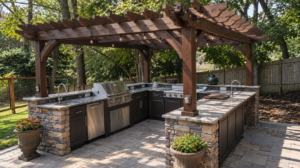
The outdoor kitchen has moved from a luxury add-on to one of the most considered upgrades in the American backyard, and more homeowners are now
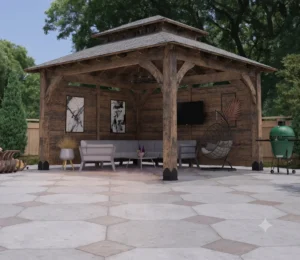
Outdoor structures have become a long-term feature of the American backyard, and the single decision that determines how long one lasts is rarely the roof
It looks like you're visiting from Canada. We have a dedicated Canada site for you.
Take me to the Canada site